Empowering Daily Life Through Personal Safety
Feeling more confident in everyday life can start with learning how to look after your personal safety. For women in Odessa and across Pasco County, self-defense training offers a chance to build awareness, practice setting boundaries, and become more comfortable learning new skills.
Personal safety involves more than a physical response. At Gracie Barra Odessa, training connects awareness, balance, and calm decision-making with practical experience on the mat. The goal is to build useful habits that can support you beyond class.
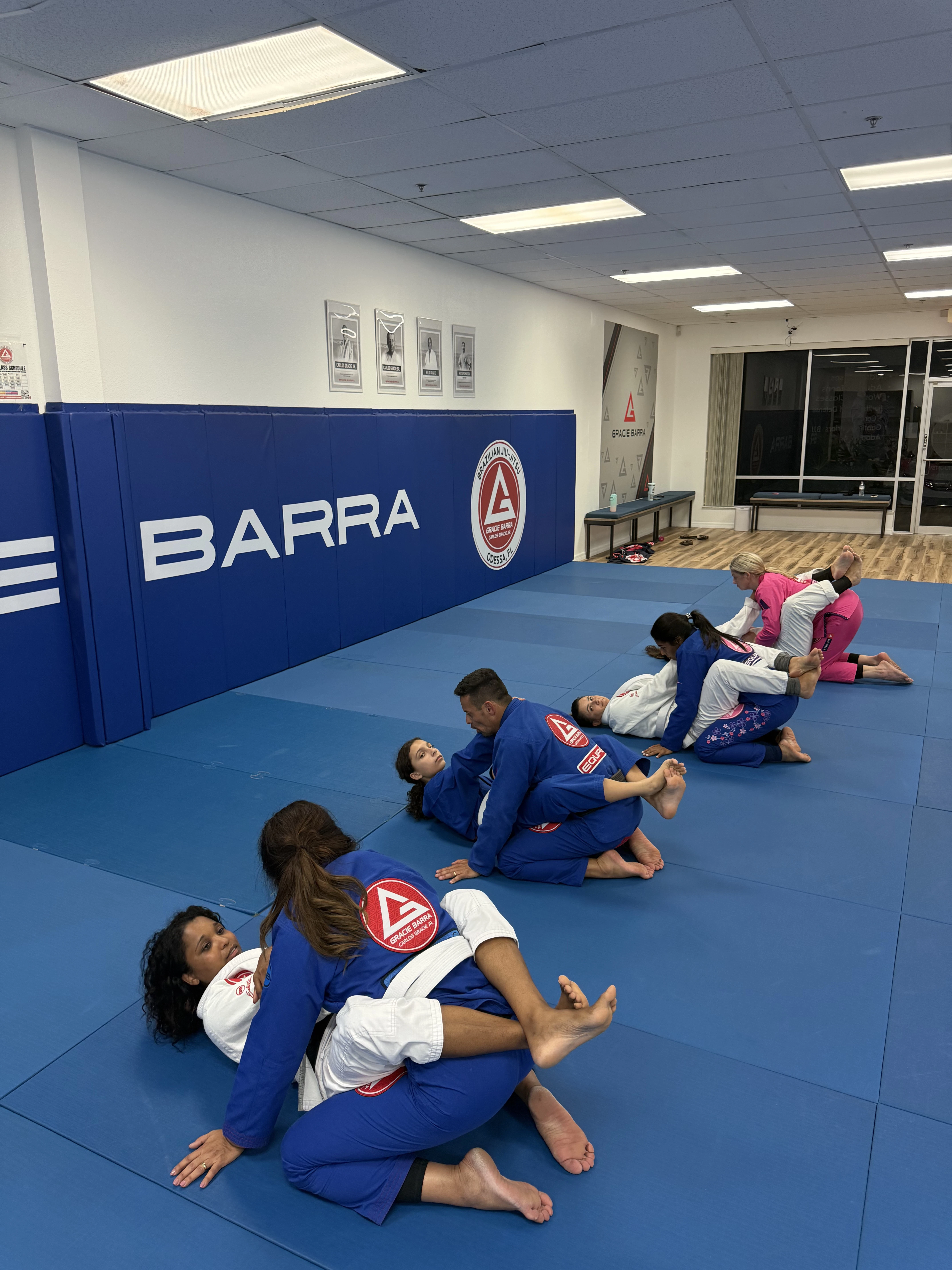
DISCOVER GRACIE BARRA ODESSA
CLICK HERECore Principles of Women’s Self-Defense in Odessa
Women’s self-defense starts with noticing what is happening around you and considering your options. Recognizing discomfort, allowing yourself to leave, and knowing where to seek help are just as relevant as learning physical skills.
Recognizing Environmental Hazards Early
Situational awareness means paying attention to your surroundings without feeling that you need to be on alert every moment. Noticing exits, looking around before entering a parking area, and putting your phone away when you need to focus are simple starting points.
Some situations offer warning signs, while others happen unexpectedly. Awareness cannot prevent every incident, but it can help you notice changes and decide whether to move away, change direction, or ask for help.
Establishing Physical Boundaries and Verbal De-Escalation
Setting a boundary can be as simple as saying, ‘Please step back,’ or, ‘I don’t want to continue this conversation.’ Practicing clear language can make it easier to speak up when an interaction feels uncomfortable.
You do not need to keep explaining a boundary or stay in an interaction to appear polite. A clear statement may also help people nearby understand that you want space or assistance, though another person’s response is never entirely within your control.
Mastering Safe Distance and Spatial Positioning
Having space can give you more time to notice movement and consider your next step. There is no single distance that guarantees safety; the setting, available exits, and the other person’s behavior all affect your options.
Notice whether you have a clear route toward an exit or other people. Thinking about where you could move can be more useful than concentrating only on the person making you uncomfortable.
Transitioning from Awareness to Decisive Action
Stress can make it difficult to decide what to do, and freezing is a response people may experience. Training gives you opportunities to discuss different situations and practice manageable responses without expecting yourself to react perfectly.
Taking action may mean ending a conversation, leaving the area, or calling for help. The purpose of self-defense is to support your safety, with the response depending on the circumstances rather than a need to prove yourself.
Leverage and Mechanics Over Physical Strength
Jiu-Jitsu introduces ways to use positioning, balance, and movement instead of relying only on strength. These ideas take practice, and a size or strength difference still matters. Learning them can help students better understand their options without promising a guaranteed outcome.
Escaping Common Wrist and Arm Grabs
A wrist or arm grab can feel intimidating, especially if it happens unexpectedly. In supervised practice, students can explore how balance, grip, and movement affect their ability to create space.
Learning with an instructor allows you to ask questions and work at a manageable pace. A short written explanation cannot replace that practice; the aim is to understand the movement and recognize when there may be an opportunity to move away.
Defending Against Standing Bearhugs and Holds
Being held around the body can limit movement and feel overwhelming. Practicing carefully with a partner helps students become familiar with that pressure and understand why balance and positioning matter.
These exercises should develop gradually, with clear communication between partners. The focus is on learning to respond to pressure and look for space, rather than expecting a single movement to work in every situation.
Neutralizing Sudden Headlocks Safely
A headlock can put pressure on the head and neck, so it needs careful instruction. Learning about this situation in class gives students a chance to discuss it with an instructor rather than trying to work out a response from written steps.
Slow, cooperative practice makes it easier to ask questions, communicate discomfort, and understand the purpose of each movement. For beginners exploring women’s self-defense in Odessa, that learning process matters more than memorizing a quick escape.
Ground Defense and Survival Strategies
Being on the ground can feel unfamiliar if you have never trained there. Jiu-Jitsu practice introduces that setting gradually, helping students learn about positioning, protecting themselves, and looking for opportunities to get up and move away.
Protecting the Vital Centers on the Ground
Ground training includes learning how body position affects the space around you. With instruction, students can explore protective positions and understand why balance and awareness still matter when they are no longer standing.
Beginners do not need to learn everything at once. Repeating a few basic movements with a cooperative partner can make the position feel more familiar and give them time to understand what they are practicing.
Using the Guard Position to Create Distance
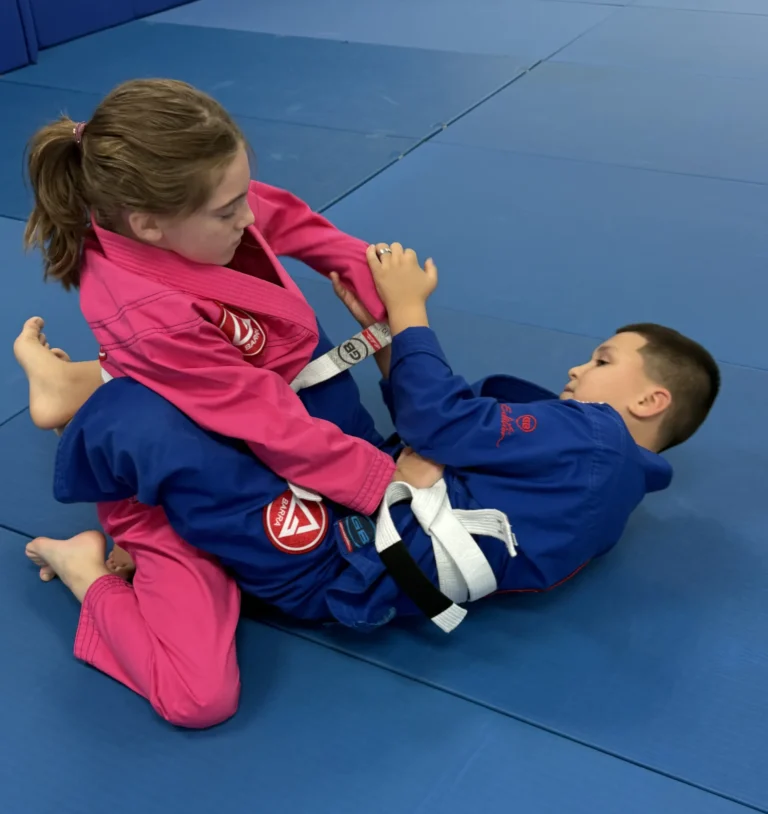
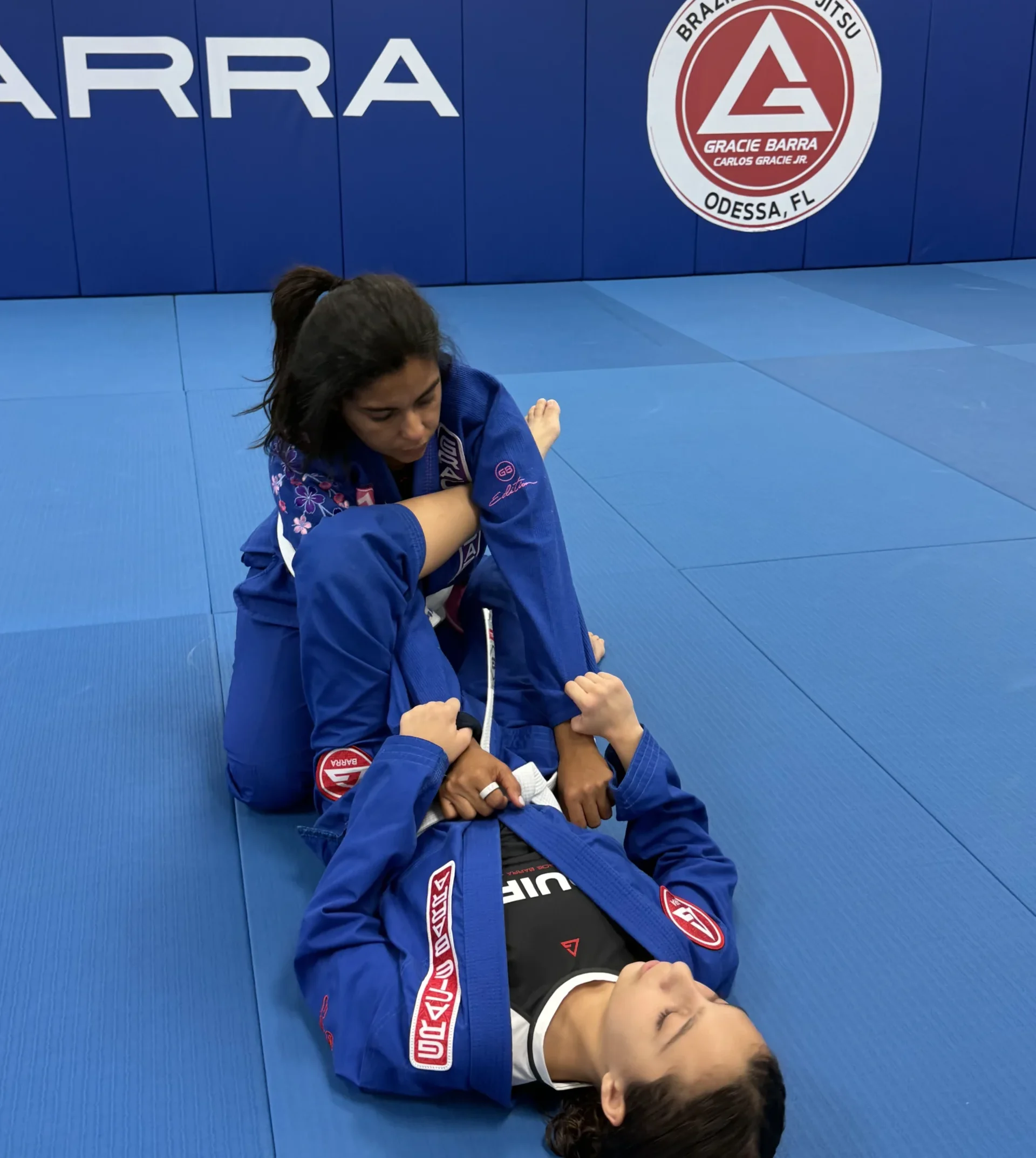
In Jiu-Jitsu, guard refers to positions where the legs help manage space while a practitioner is on the ground. For a beginner, understanding that basic purpose is more useful than memorizing a long list of techniques.
Class practice can show how distance and positioning change as a partner moves. In a personal safety context, the emphasis remains on finding opportunities to disengage and get back up, rather than treating the situation like a sporting match.
Technical Stand-Up Mechanics Under Pressure
A technical stand-up is a movement taught in Jiu-Jitsu to help practitioners return to their feet while paying attention to balance and distance. Learning it step by step in class is more useful than rushing through a written description.
Students can begin slowly, ask for adjustments, and repeat the movement at a suitable pace. Familiarity can build over time, while the surroundings and circumstances still affect whether and how someone can get up.
Sustainable Practice and Structured Skill Building
Self-defense skills develop through regular practice rather than a single lesson. A steady routine gives you time to ask questions, revisit unfamiliar movements, and notice progress without feeling that you need to master everything immediately.
A cooperative training environment supports that process through clear communication and respect for each partner’s limits. At Gracie Barra Odessa, students can approach their training one step at a time, with an emphasis on safety, respect, and gradual development.
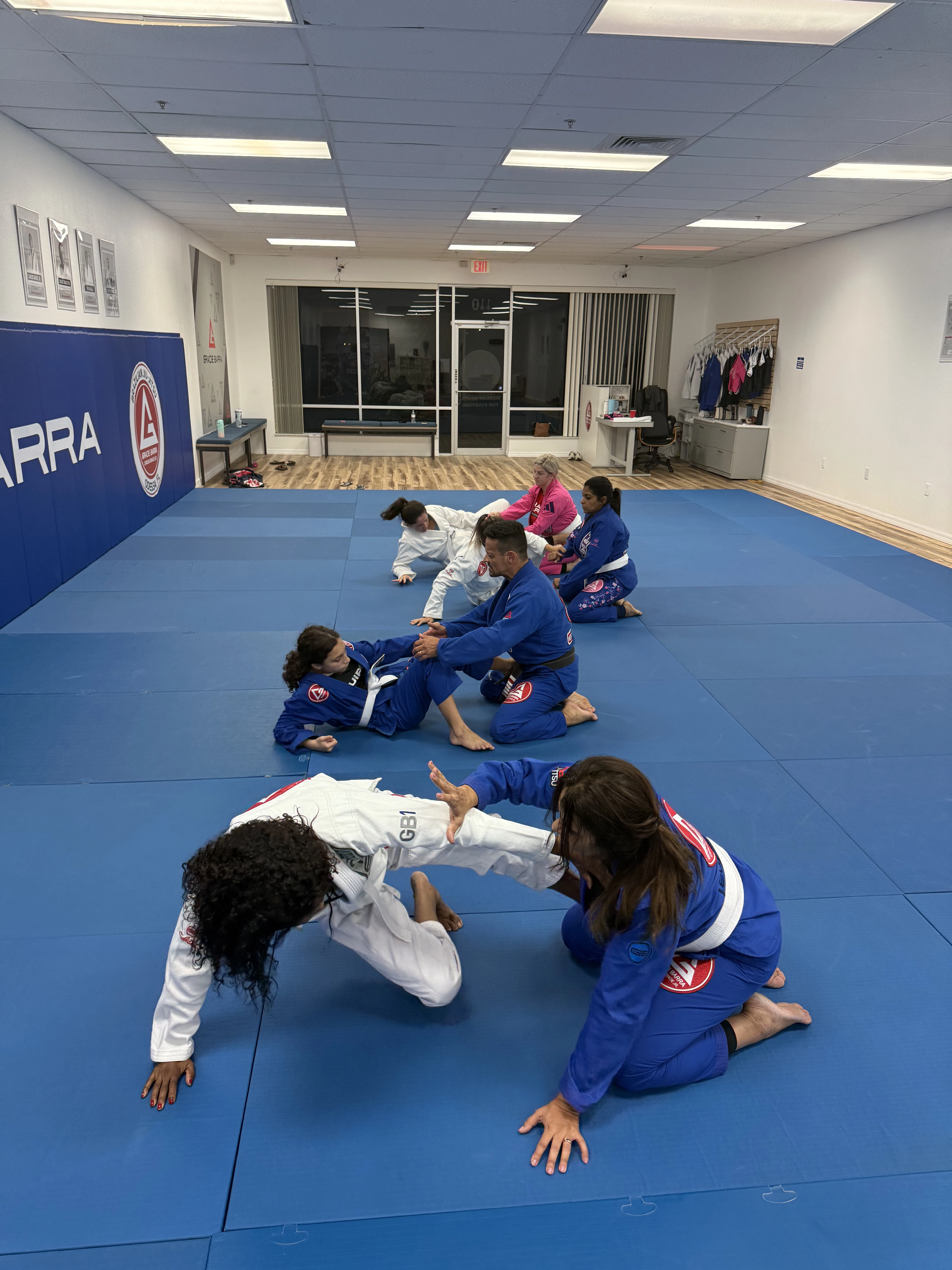
Developing Instinctive Confidence for Daily Routines
Confidence often grows through small experiences: asking a question in class, speaking up about a boundary, or feeling more comfortable practicing with a partner. These everyday steps keep self-defense connected to the reasons many women begin training.
Training does not remove every worry or make someone responsible for another person’s behavior. It can offer a place to build skills, connect with training partners, and develop confidence at a pace that feels manageable.
DISCOVER GRACIE BARRA ODESSA
CLICK HERETaking the First Step Toward Personal Security
Exploring women’s self-defense in Odessa can be a practical step toward feeling more informed about your personal safety. Awareness, clear boundaries, and consistent practice give you useful areas to work on without needing to become an expert overnight.
If you are considering getting started, contact Gracie Barra Odessa to ask about training and what to expect as a beginner. A conversation about your goals can help you decide on your next step and arrive with a clearer idea of the learning process.